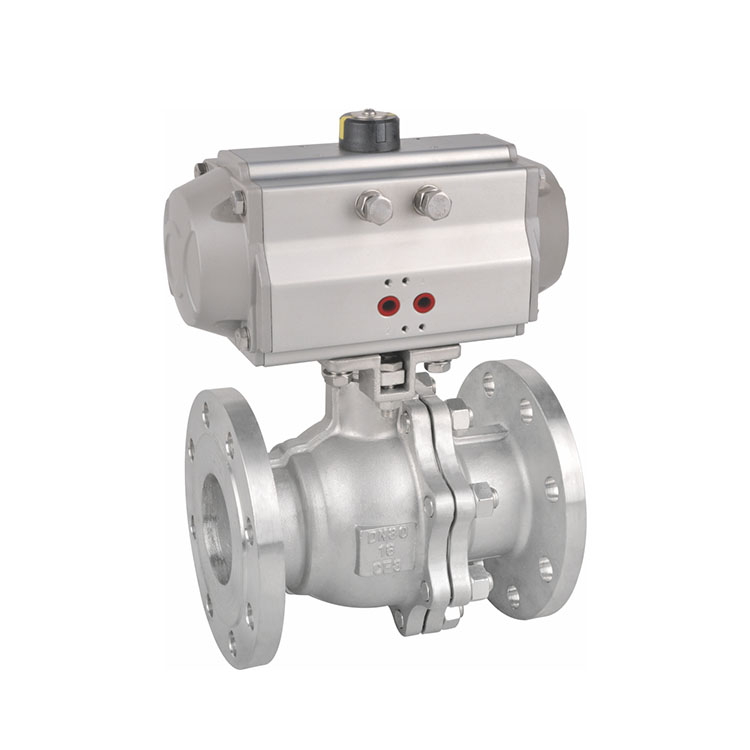
Ball valves are a cornerstone of industrial fluid handling systems, providing reliable flow control for liquids, gases, and corrosive media across a variety of industries. Known for their simple design, durability, and full-port capabilities, ball valves have been widely adopted in chemical, petrochemical, oil and gas, water treatment, and power generation applications.
With the growing emphasis on automation, process optimization, and remote control in industrial operations, traditional manual ball valves are increasingly being replaced or supplemented by pneumatic actuated ball valves. These valves combine the proven reliability of ball valve technology with pneumatic actuation to offer rapid, precise, and remote-controlled flow regulation.
Pneumatic actuated ball valves have become essential components in modern automation systems, enabling efficient operation, reducing manual labor, improving safety, and allowing integration with process control networks.
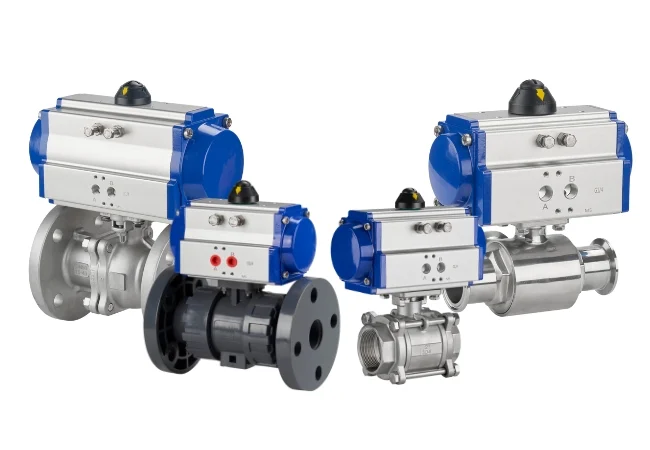
A pneumatic actuated ball valve is a ball valve equipped with a pneumatic actuator that converts compressed air pressure into mechanical motion to open or close the valve. The actuator allows for remote or automated operation, eliminating the need for manual intervention.
These valves typically consist of:
- Valve Body: The main component that houses the ball, stem, and seals.
- Ball: A hollow, spherical disc that controls fluid flow by rotating 90 degrees.
- Stem: Connects the ball to the actuator.
- Pneumatic Actuator: Uses compressed air to rotate the stem and ball.
- Accessories (Optional): Positioners, limit switches, solenoid valves, and feedback devices for automation and control.
The actuator's design determines how quickly and efficiently the valve operates, while the valve body material and sealing type determine its suitability for specific fluids, temperatures, and pressures.
The operation of a pneumatic actuated ball valve relies on the conversion of air pressure into mechanical motion. Depending on the actuator type, pneumatic actuation can be achieved through single-acting (spring return) or double-acting mechanisms.
In single-acting actuators, compressed air moves the valve to the open position while a spring automatically returns it to the closed position when air pressure is released. This design is often used for fail-safe applications, where the valve must return to a safe position during power or air supply failure.
Double-acting actuators use compressed air for both opening and closing the valve, providing precise control and rapid operation. This type is suitable for high-speed automation, larger valves, and applications requiring frequent cycling.
Pneumatic actuated ball valves can be integrated with process control systems using accessories like:
- Solenoid Valves: Electrically controlled valves that regulate air supply to the actuator.
- Positioners: Ensure precise valve positioning and modulation.
- Limit Switches and Sensors: Provide feedback to control systems on valve status (open or closed).
This integration allows for fully automated operation, remote monitoring, and incorporation into SCADA, DCS, or PLC systems.
Pneumatic actuated ball valves are available in several configurations to meet diverse industrial needs:
- Two-Piece Body: Economical and widely used. Easy to assemble and maintain.
- Three-Piece Body: Allows in-line maintenance and cleaning without removing the valve from the pipeline. Common in hygienic and chemical applications.
- Top-Entry Body: Provides easier access for internal inspection and maintenance in large valves.
- Full Port (Full Bore): The ball's inner diameter equals the pipeline diameter, minimizing pressure drop and enabling pigging operations.
- Reduced Port (Standard Bore): Slightly smaller than the pipeline, offering lower cost and lighter weight but with slightly increased pressure drop.
- Single-Acting Pneumatic Ball Valves: Spring return for fail-safe applications.
- Double-Acting Pneumatic Ball Valves: Air-driven in both directions for high-speed, precise control.
- Rotary Pneumatic Actuators with Rack-and-Pinion or Scotch Yoke Mechanism: Commonly used for quarter-turn ball valves.
- PTFE (Teflon) Seals: Highly resistant to chemicals and corrosion.
- RPTFE or Reinforced PTFE: Suitable for higher temperatures and pressures.
- Metal-to-Metal Seals: Used in high-temperature, high-pressure applications where polymer seals are unsuitable.
Pneumatic actuated ball valves offer a range of benefits that make them ideal for modern industrial systems:
Automation allows operators to control valves from centralized control rooms, reducing manual intervention, labor costs, and response time during critical processes.
Quarter-turn operation provides rapid opening and closing, ensuring accurate flow control and efficient process management.
Single-acting spring-return actuators can automatically move valves to safe positions in the event of air supply failure, enhancing safety in emergency scenarios.
These valves are suitable for a broad spectrum of media, including water, oil, gas, steam, chemicals, and slurry. Material selection ensures compatibility with corrosive, abrasive, or high-temperature fluids.
Fewer moving parts and durable actuator designs reduce maintenance requirements and extend service life.
Pneumatic actuated ball valves can communicate with control systems via positioners, limit switches, and solenoid valves, enabling real-time monitoring, diagnostics, and automated control.
Pneumatic actuated ball valves are widely used in various sectors due to their versatility, reliability, and automation capabilities:
Used for controlling crude oil, natural gas, and refined products in pipelines, storage tanks, and processing plants. Automation ensures safe and efficient operation in high-pressure environments.
Handles corrosive or hazardous chemicals with high precision. Double-acting actuators allow continuous process control for complex chemical reactions.
Provides rapid isolation, flow control, and emergency shut-off in municipal water, wastewater treatment, and industrial water systems.
Used in steam, cooling, and fuel systems for thermal, nuclear, and renewable power plants. Pneumatic actuation ensures fast response in critical safety and control scenarios.
Three-piece, hygienic ball valves with pneumatic actuators are used for precise flow control, cleaning-in-place (CIP) processes, and safe handling of liquids.
Integrated into automated heating, ventilation, and cooling systems, as well as industrial pipelines, to regulate fluids efficiently with minimal operator intervention.
Proper installation is critical to ensure the long-term reliability, safety, and performance of pneumatic actuated ball valves. These valves combine precise mechanical components with pneumatic actuation, and any misalignment or improper setup can lead to operational issues, increased wear, or system downtime.
First, it is essential to ensure that the actuator is correctly aligned with the valve stem. Misalignment can cause uneven torque transmission, increased friction, and potential damage to the actuator or valve components. Checking alignment before commissioning helps prevent premature failures.
Next, verify that the compressed air supply meets the actuator's pressure and flow specifications. Insufficient air pressure or volume can result in incomplete valve operation, slow response, or failure to achieve the desired open or closed position.
Solenoid valves, limit switches, and feedback devices must be installed according to the manufacturer's guidelines. Correct placement ensures proper control, accurate valve positioning, and integration with automation systems or process control networks.
Adequate space around the actuator is necessary to allow for maintenance, inspection, and potential replacement of components without disrupting the surrounding pipeline. Additionally, proper piping support is crucial to prevent stress or bending forces on the valve body, which could compromise sealing, alignment, or overall performance.
By following these installation best practices, operators can maximize the efficiency, safety, and service life of pneumatic actuated ball valves in industrial systems.
Routine maintenance ensures long-term performance and safety:
- Periodically check actuator operation and air supply lines.
- Inspect seals and seats for wear, corrosion, or leakage.
- Replace batteries or lubricants where required in smart pneumatic systems.
- Test solenoid valves, positioners, and feedback sensors for correct operation.
- Clean or replace filters in air supply systems to prevent actuator failure.
Proactive maintenance reduces downtime, extends valve life, and ensures consistent process control.
When choosing a valve, consider:
- Media type, temperature, and pressure.
- Valve size, port configuration, and flow requirements.
- Actuator type (single vs. double acting) and torque output.
- Automation integration and control system compatibility.
- Material compatibility for corrosive or abrasive fluids.
- Safety and compliance standards, such as API, ANSI, ISO, and DIN.
Working with experienced manufacturers ensures optimal design, reliable operation, and long-term service support.
Pneumatic actuated ball valves meet strict industrial safety standards. Key safety features include:
- Fail-safe spring-return actuators
- Locking mechanisms to prevent unauthorized operation
- Pressure relief valves and accessories
- Compliance with API 608, ISO 5211, and other global standards
Proper adherence to safety guidelines protects personnel, equipment, and the environment.
The market for pneumatic actuated ball valves is evolving rapidly:
- Integration with smart factories and Industry 4.0 platforms
- Enhanced IoT connectivity for real-time monitoring and predictive maintenance
- Development of energy-efficient actuators and low-pressure operation
- Hybrid solutions combining pneumatic and electric actuation for flexible automation
These trends indicate that pneumatic actuated ball valves will continue to play a critical role in industrial automation and process optimization.
Pneumatic actuated ball valves combine the reliability and simplicity of traditional ball valves with advanced automation, safety, and control capabilities. They are suitable for a wide range of industries, including oil and gas, chemical processing, water treatment, power generation, food and beverage, and HVAC systems.
By enabling fast, precise, and remote-controlled operation, pneumatic actuated ball valves improve process efficiency, reduce manual labor, enhance safety, and integrate seamlessly with modern control systems. With proper selection, installation, and maintenance, these valves offer long service life, reliable performance, and an essential solution for today's automated industrial environments.